
Customer support teams increasingly use artificial intelligence to answer routine enquiries, manage conversations and reduce repetitive administrative work. However, not every AI solution serves the same purpose. Some platforms specialise in automated conversations, while others provide complete helpdesk systems or AI-powered telephone support.
The best AI customer support tools help businesses improve response times without compromising service quality or losing the ability to involve human agents. Choosing the right AI Customer Service Software also helps organisations manage enquiries efficiently while maintaining consistent service standards.
This guide compares nine AI customer support platforms in 2026, including Retell AI, Intercom Fin, Zendesk AI, Ada, Sierra, Decagon, Gorgias, Freshdesk and Tidio. We examine their capabilities, pricing structures, advantages, limitations and ideal use cases to help businesses identify suitable solutions.
Last Updated: 31 October 2026
Best AI Customer Support Tools at a Glance
The following comparison highlights the primary strengths and limitations of the nine platforms.
Pricing note: The table describes pricing models rather than guaranteed current quotations. Subscription rates, AI usage charges, included allowances and contractual terms should be confirmed directly with each provider before purchasing.
The most important distinction is whether your business needs a standalone AI agent, an AI-powered helpdesk or a specialised voice automation system. Businesses managing high enquiry volumes may benefit from AI Helpdesk Platforms that combine ticket management, automated routing and human agent collaboration.
The article is a research-based comparison, not a hands-on product test. Before publication, I recommend completing official-source verification for Retell AI, Ada, Sierra, Decagon and Gorgias, particularly their current pricing, channel availability and plan-specific features.
How We Selected These AI Customer Support Tools
This comparison focuses on nine established or emerging AI customer support platforms serving different business requirements.
We considered six factors when evaluating their suitability:
- AI capabilities: The range of conversational, automation and agent-assistance features.
- Ease of use: The complexity of implementation, configuration and ongoing management.
- Integrations: Compatibility with helpdesk systems, ecommerce platforms, customer databases and communication tools.
- Pricing and value: Available pricing models, potential usage charges and cost transparency.
- Scalability: Suitability for increasing customer enquiries and expanding support operations.
- Customer support functionality: Ticket management, reporting, escalation and human agent handoff.
The platforms are not presented as a numerical performance ranking. Their capabilities differ significantly, making direct comparisons inappropriate in some categories. This AI Customer Support Tools Comparison therefore focuses on practical functionality, business suitability and meaningful differences rather than unsupported numerical ratings.
This is a research-based editorial comparison, not a hands-on software benchmark. Recommendations reflect documented product positioning and practical business suitability rather than independently measured resolution rates or customer satisfaction scores.
The 5 Best AI Customer Support Tools Reviewed
1. Retell AI — Best for AI Voice Customer Support
Overview
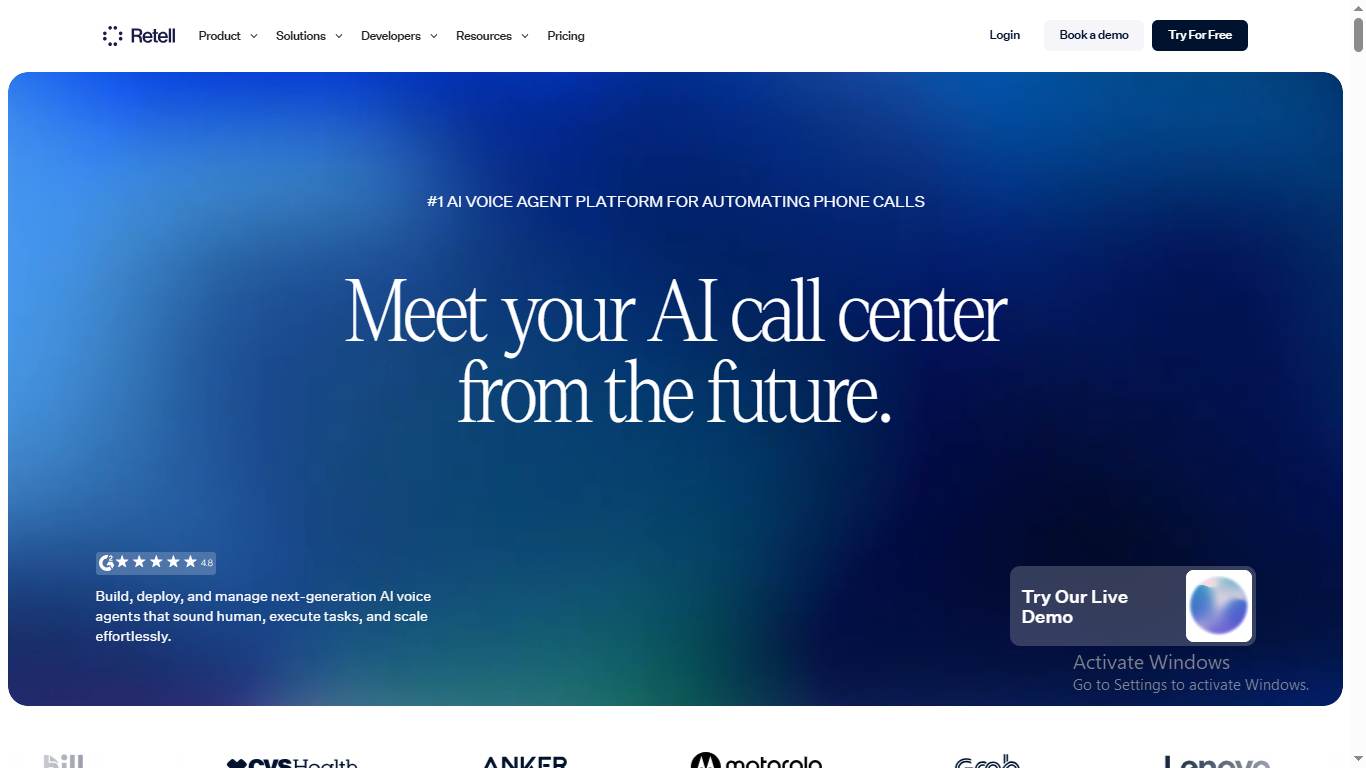
Retell AI is a conversational voice AI platform designed to help businesses build and deploy automated telephone agents. Rather than functioning as a traditional helpdesk, it focuses on handling spoken interactions through AI-powered voice conversations.
Businesses can use the platform for inbound enquiries, appointment scheduling, call routing and other structured telephone workflows. Unlike traditional Customer Service Automation Tools designed primarily for text-based interactions, Retell AI focuses on automating spoken customer conversations.
Its primary advantage is the ability to automate phone-based interactions without requiring every conversation to begin with a human representative.
Key Features
- Conversational AI voice agents for inbound and outbound calls.
- Integrations and API capabilities for connecting business systems.
- Customisable conversation workflows and agent instructions.
- Call monitoring and conversation analysis capabilities.
Pricing
Retell AI uses a usage-based pricing approach. Costs can depend on voice agent components, call duration, telephony and selected services.
Businesses should calculate their expected monthly call minutes rather than evaluating the advertised per-minute rate alone.
Best For:
Businesses that want to automate telephone enquiries, appointment bookings, call qualification or routine voice support interactions.
2. Intercom Fin — Best for Conversational AI Customer Support
Overview
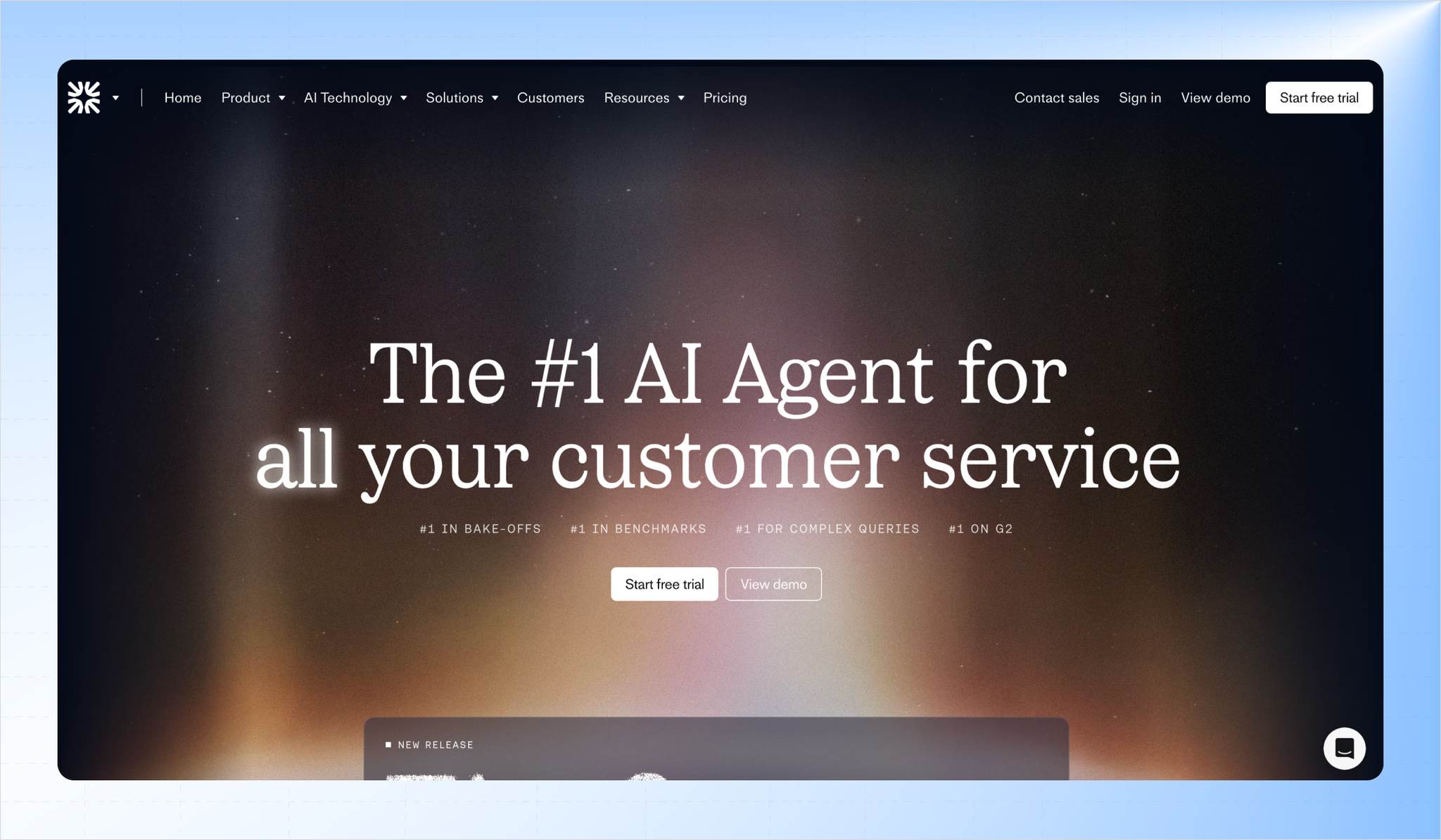
Intercom Fin is an AI customer service agent designed to answer customer questions and resolve support enquiries using approved business knowledge.
It is particularly relevant to SaaS companies and digital businesses with substantial volumes of product, account and troubleshooting questions. Integrating customer support platforms with CRM systems and AI Sales Tools can also help businesses coordinate customer interactions across sales and support teams.
Fin can work within customer support environments and escalate conversations when human assistance is necessary.
Its focus is on resolving enquiries rather than simply generating suggested responses.
Key Features
- AI-generated answers grounded in support knowledge.
- Automated handling of common customer enquiries.
- Human agent handoff for unresolved conversations.
- Integration with customer support workflows and knowledge sources.
Pricing
Fin uses a resolution-based pricing model, with commercial terms depending on deployment and associated support software.
Businesses should confirm the current cost per resolution, billing definitions, minimum commitments and any additional platform fees.
Best For:
SaaS companies, technology businesses and digital service providers seeking conversational AI that works alongside human support teams.
3. Zendesk AI — Best for Enterprise Helpdesk Automation
Overview
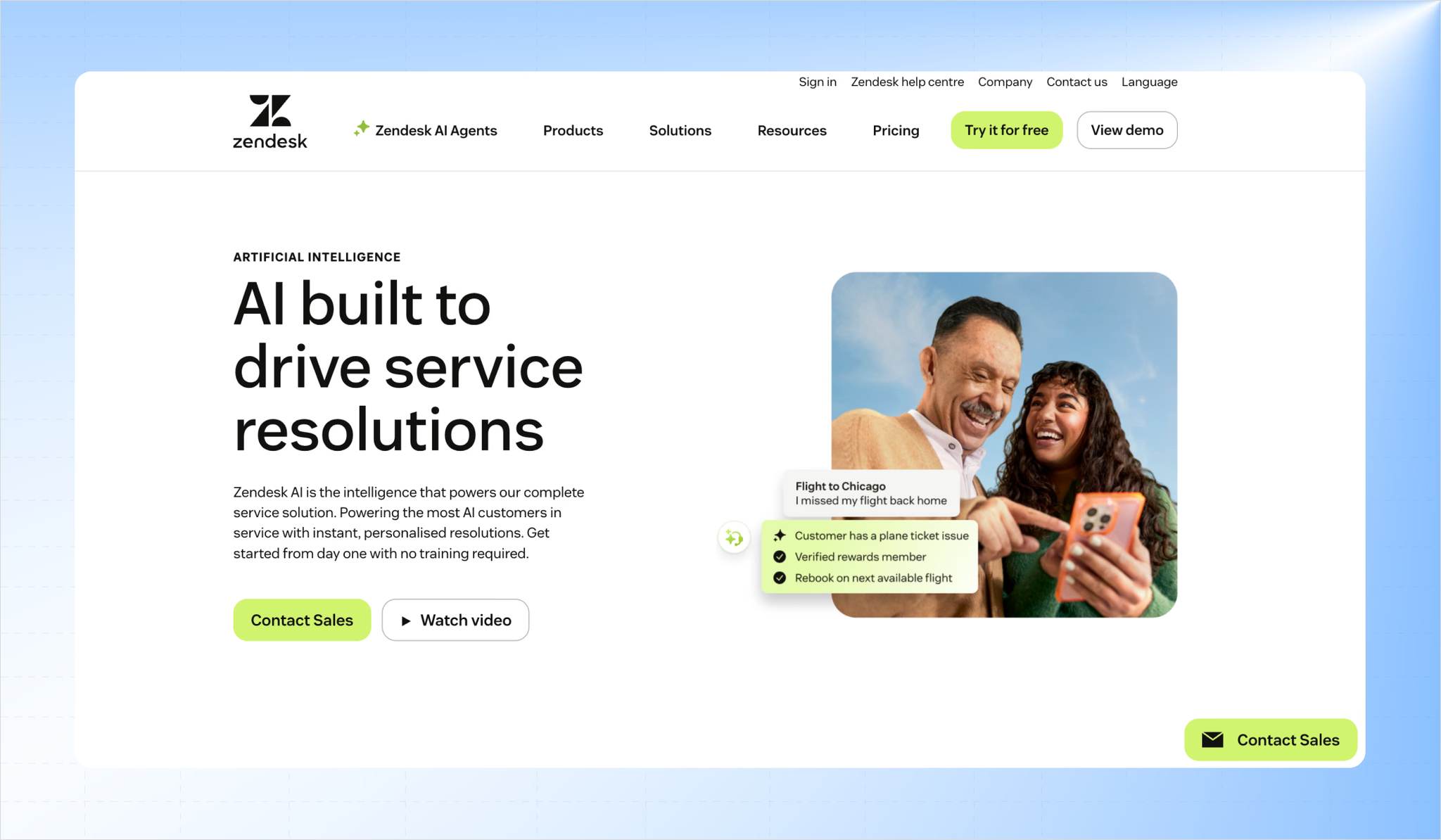
Zendesk AI extends the capabilities of the Zendesk customer service platform through artificial intelligence, automated support and agent-assistance features.
Unlike standalone chatbot products, Zendesk combines AI functionality with a broader support environment that includes ticket management, routing, reporting and customer service workflows.
This makes it particularly relevant to organisations managing substantial volumes of enquiries across multiple channels.
Key Features
- AI agents for automated customer conversations.
- Intelligent ticket classification and routing.
- AI-powered assistance for human support representatives.
- Reporting and workflow automation within the Zendesk environment.
Pricing
Zendesk offers subscription-based customer service plans, with AI capabilities and usage allowances varying by product and package.
Businesses should compare the total cost of support licences, AI functionality and any applicable usage charges.
Best For:
Mid-sized and enterprise organisations seeking AI customer service tools within a structured helpdesk environment.
4. Ada — Best for Enterprise Customer Service Automation
Overview
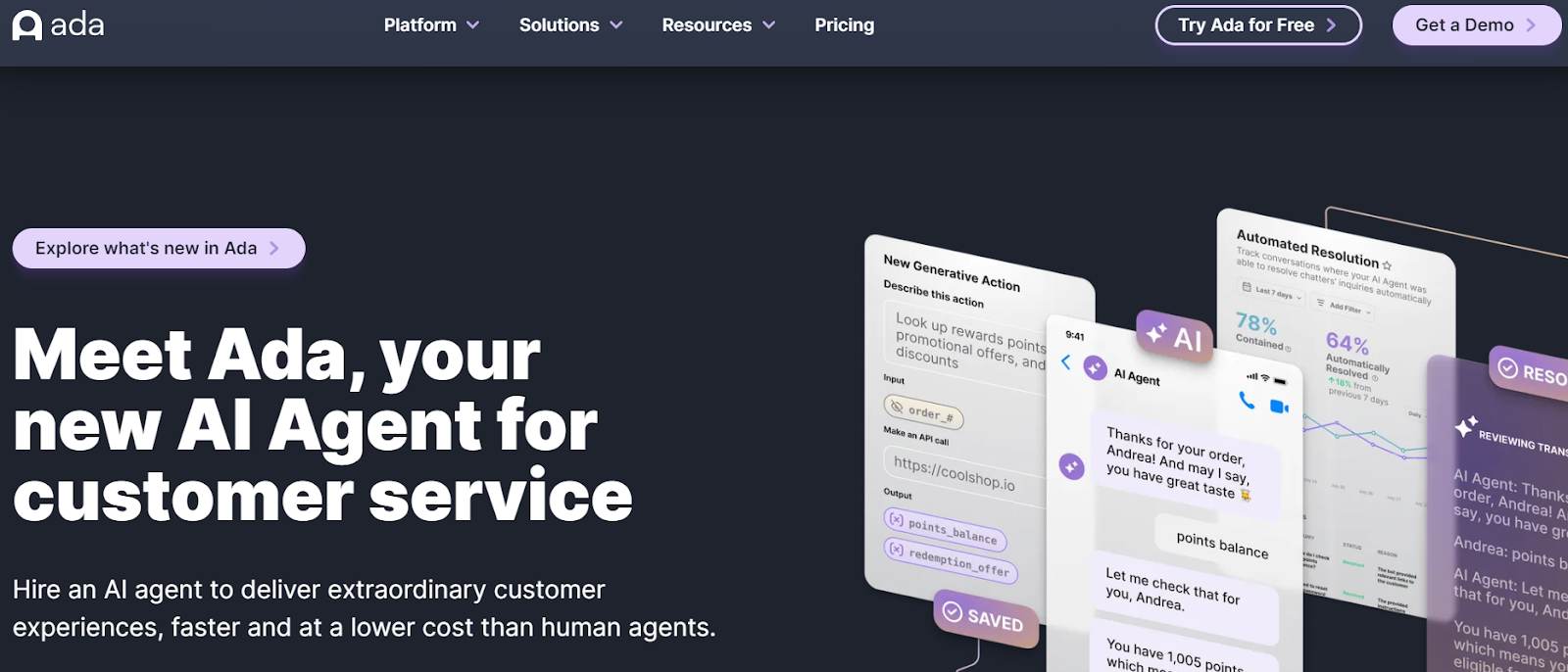
Ada is an AI customer service platform focused on automating customer conversations and resolving support enquiries.
It is designed for businesses that want AI agents to handle recurring customer requests while maintaining connections with existing support systems.
Ada is particularly relevant to organisations seeking sophisticated automation across customer service journeys rather than a basic question-and-answer chatbot.
Key Features
- AI agents for customer service conversations.
- Knowledge-based responses to common enquiries.
- Integrations with business systems and support platforms.
- Automated workflows and escalation capabilities.
Pricing
Ada generally uses a sales-led pricing approach.
Prospective customers should request a quotation covering implementation, usage allowances, integrations and ongoing support requirements.
Best For:
Larger businesses seeking to automate recurring customer enquiries and service workflows across established support operations.
5. Sierra — Best for Enterprise Conversational Customer Experiences
Overview
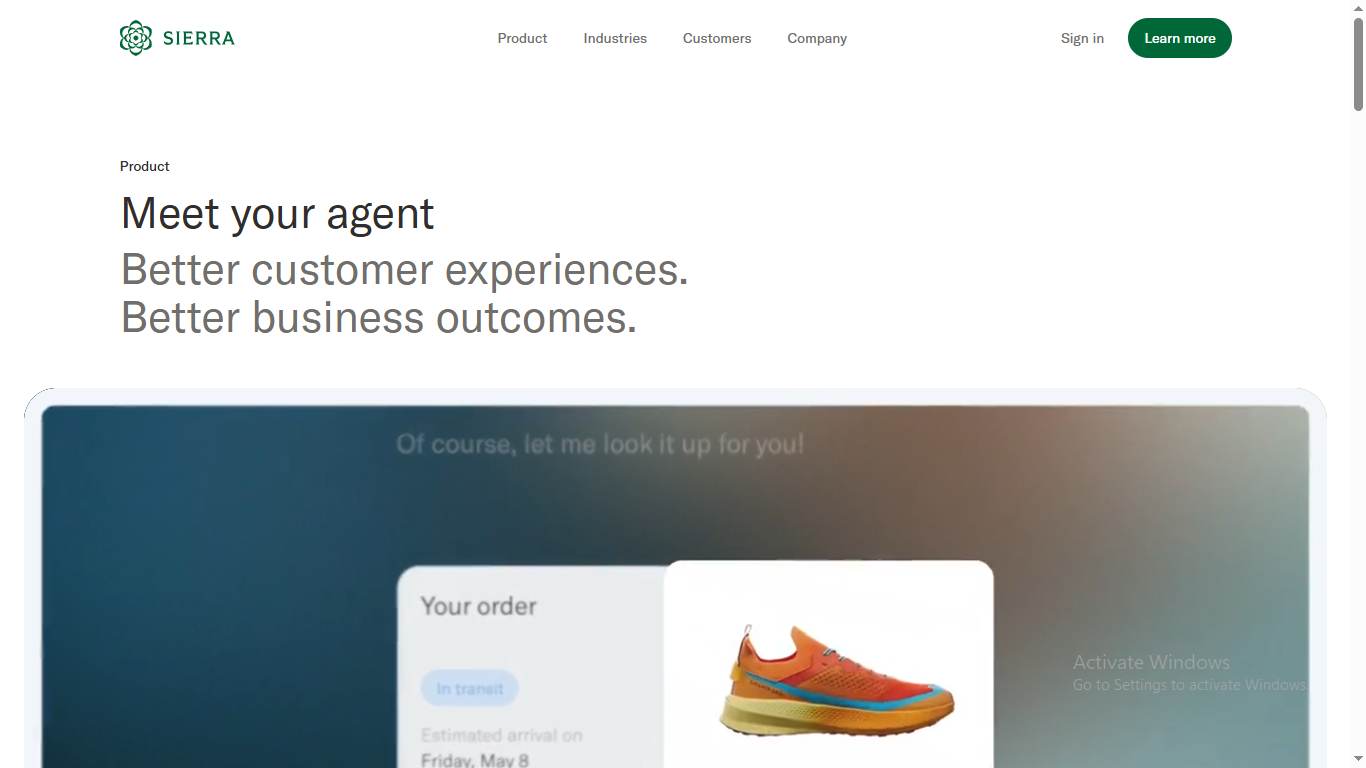
Sierra develops conversational AI agents designed to help businesses manage customer interactions and complete service-related tasks.
The platform focuses on providing AI-driven customer experiences that can extend beyond answering informational questions.
Its enterprise positioning makes it relevant to organisations interested in integrating conversational AI with customer accounts, business processes and service workflows.
Key Features
- Conversational AI agents for customer interactions.
- Workflow execution connected to business systems.
- Personalised responses using relevant customer context.
- Support for enterprise customer experience requirements.
Pricing
Sierra uses a sales-led commercial approach.
Businesses should contact the provider for current pricing, implementation requirements and contractual details.
Best For:
Enterprise organisations seeking conversational AI agents that can support customer service transactions and complex service journeys.
AI Customer Support Tools: Feature Comparison
AI customer support platforms differ in the channels they support and the extent to which they manage complete service operations.
The table below distinguishes native capabilities from functionality that may require integrations or additional products.
Important: Product capabilities, supported channels and plan entitlements can change. Buyers should verify the precise features available in their intended deployment.
What Are the Most Important Differences?
The largest difference is between platforms designed to conduct conversations and platforms designed to manage complete customer service operations. Many Top AI Support Chatbots focus on resolving customer questions, while broader helpdesk systems also provide ticket tracking, workflow management and reporting.
Retell AI primarily addresses telephone automation. Intercom Fin, Ada, Sierra and Decagon focus on conversational AI agents and automated service resolution.
Zendesk, Freshdesk and Gorgias provide broader helpdesk environments, making them relevant when businesses need ticket tracking, agent workflows and reporting alongside AI.
Tidio occupies a more accessible position for businesses primarily interested in website chat.
Choosing the correct software category is often more important than comparing individual AI features.
How to Choose the Right AI Customer Support Tool
Selecting AI customer support software requires more than comparing chatbot features. Businesses should consider their existing workflows, communication channels and long-term service requirements. A practical AI Customer Support Software Guide should also help decision-makers evaluate implementation costs, integration requirements and the level of human oversight needed.
Identify Your Support Channels
Start by identifying where customers currently contact your business.
Website chat, email, telephone support and social messaging require different capabilities.
A business receiving thousands of telephone enquiries may benefit more from voice AI than from a website chatbot. Conversely, a SaaS company managing technical questions may prioritise knowledge-based conversational AI.
Evaluate AI Automation and Human Handoff
Determine which enquiries the AI system should resolve independently. Businesses can also explore AI Automation to streamline repetitive workflows, reduce manual tasks and improve operational efficiency across customer service and marketing activities.
Simple questions about opening hours or delivery policies may be easier to automate than billing disputes or complex technical problems.
Evaluate how the platform accesses approved information, performs actions and transfers unresolved conversations to human representatives.
Human escalation should preserve relevant conversation context wherever possible.
Compare Pricing and Integration Requirements
AI customer support pricing can involve several components, including:
- Monthly software subscriptions.
- Charges per conversation or AI resolution.
- Voice usage and telephony costs.
- Implementation and integration expenses.
- Additional charges for advanced features.
Estimate costs using realistic support volumes rather than relying exclusively on advertised starting prices.
Consider Scalability, Security and Reliability
Evaluate whether the platform can support increasing enquiry volumes, additional communication channels and expanding teams.
Businesses handling sensitive customer information should also examine data protection, access controls, retention policies and contractual security commitments.
Before deployment, test the system with realistic customer scenarios and establish procedures for monitoring inaccurate answers and failed workflows.
Which AI Customer Support Tool Is Best for Your Business?
The most suitable AI customer service platform depends on your operational priorities.
For small businesses: Tidio is a practical starting point for website chat and common customer questions. Freshdesk may be more suitable when structured ticket management is essential.
For ecommerce companies: Gorgias is worth prioritising because of its ecommerce integrations and order-related support workflows.
For SaaS businesses: Intercom Fin is a strong candidate for automating product questions and knowledge-based customer enquiries.
For enterprise support teams: Zendesk AI offers an established helpdesk environment, while Ada, Sierra and Decagon warrant evaluation for more specialised AI automation requirements.
For businesses requiring telephone automation: Retell AI is particularly relevant because voice conversations are central to its product offering.
Businesses should shortlist two or three suitable platforms and compare them using actual customer enquiries, projected usage and integration requirements.
FAQs
Final Verdict
The best AI customer support tools in 2026 serve different business requirements rather than competing as interchangeable products.
Retell AI is worth considering for voice automation, while Intercom Fin is relevant to knowledge-driven conversational support. Zendesk AI and Freshdesk suit businesses requiring structured helpdesk operations, and Gorgias is particularly useful for ecommerce support. When evaluating the Best AI Tools for Customer Service, businesses should prioritise platforms that address their specific operational challenges rather than selecting software based on popularity alone.
Ada, Sierra and Decagon offer options for more complex customer service automation, while Tidio provides an accessible starting point for smaller businesses.
Before choosing a platform, identify your most frequent customer enquiries, calculate expected usage and assess integration requirements.
The right solution is the one that reliably handles your actual support workload while keeping costs manageable and human assistance available when needed.